Welded vs. Bolt-On Wear Parts: How to Choose the Attachment Method
Welded and bolt-on wear parts are not simply permanent versus removable versions of the same joint. Each depends on a supporting structure designed for its load path, and each creates a different maintenance system.
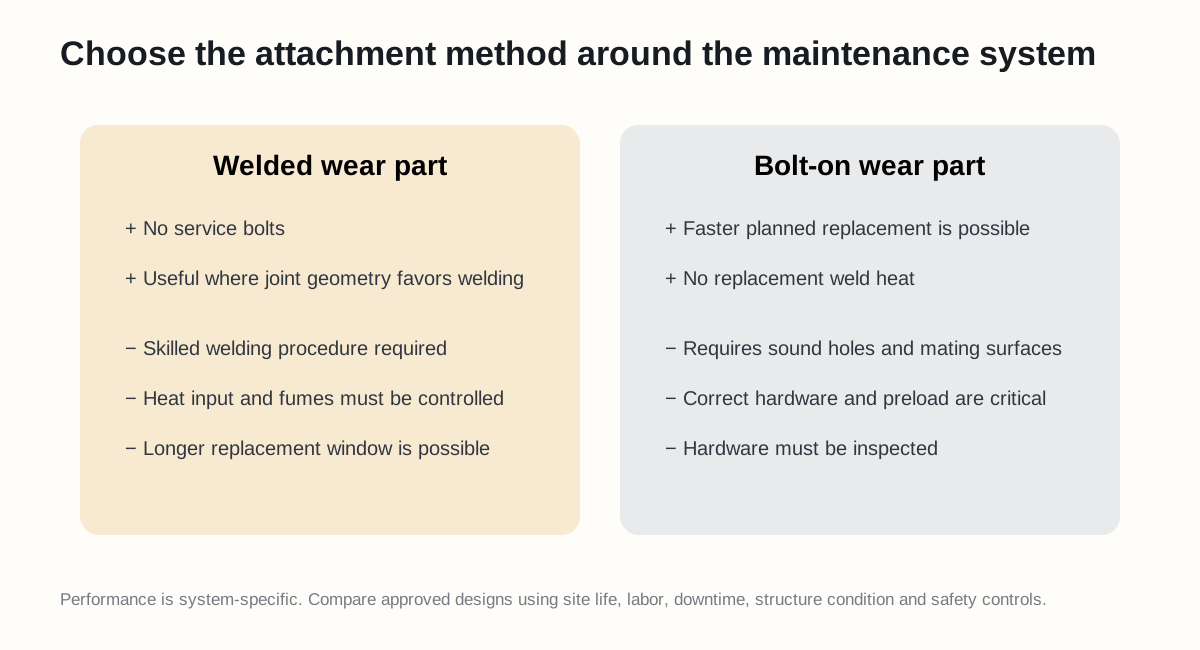
Figure 1. Compare complete approved systems, not isolated attachment features.
Welded wear parts
Advantages
- No service bolts projecting through the structure
- Can suit continuous bars, liners and geometries designed around welds
- No threaded hardware to inspect during service
Controls and trade-offs
- Requires a qualified welding procedure and welder
- Base and wear material weldability must be known
- Preheat, consumable, heat input and interpass temperature may be controlled
- Distortion, hydrogen cracking and weld quality require management
- Removal can involve gouging, cutting, fumes and repair of the base surface
“Weld it harder” is not a repair strategy. Extra weld metal or an unapproved pattern can increase restraint and move stress into the base structure.
Bolt-on wear parts
Advantages
- Planned replacement can be faster when access is good
- No replacement welding heat or weld fumes
- Sections can often be changed individually
- Removal may be easier to standardize for maintenance crews
Controls and trade-offs
- Base edge and holes must be sound and correctly aligned
- Mating surfaces must be clean and flat
- Correct bolts, nuts, friction condition and preload are critical
- Hardware needs inspection; loose joints can fret and elongate holes
Do not generalize one product trial
Caterpillar reports that its BOHA system for specific underground loaders took about 1–2 hours to replace versus 20–40 hours for the compared weld-on sets, and in some field cases achieved up to double the life. Those are manufacturer results for that particular system and application, not a universal bolt-on advantage. See Cat BOHA.
Lifecycle comparison
Use a site model:
Lifecycle cost = wear parts + consumables + labor + planned downtime + inspection + base repair + unplanned failure cost
| Input | Welded system | Bolt-on system |
|---|---|---|
| Part and consumables | Wear part + welding consumables | Wear part + specified hardware |
| Skills | Qualified welding and inspection | Mechanical fitting and controlled tightening |
| Equipment | Welding, extraction and fume controls | Lifting, removal and calibrated torque tools |
| Structure risk | Heat, gouging and weld repair | Hole wear, fretting and clamp loss |
| Change time | Site-specific | Site-specific |
Selection questions
- Is the bucket or blade engineered for the proposed attachment system?
- What are the dominant impact and abrasion loads?
- Can the site execute and inspect the required welding procedure?
- Are holes, access and mating surfaces suitable for a bolted joint?
- How valuable is downtime, and what resources are actually available?
- What failure mode has the current system shown?
- Is conversion approved by the equipment or attachment engineer?
Sources
- Caterpillar: Bolt-On Half-Arrow GET
- Caterpillar: Bolt-Together Buckets
- Caterpillar: Cutting Edge Systems
Engineering note: never convert a welded joint to bolt-on, or bolt-on to welded, without an approved structural design and procedure.